Bucharest, Iberia’s New Summer Destination
Iberia launches a brand-new route on 3 June. From then until 30 September, flights will operate every Wednesday and Sunday to Bucharest – a city brimming with history and an endless cultural offering, set close to fairytale landscapes such as the Carpathian Mountains and their iconic heart, Transylvania. This summer, fly from Madrid to the Romanian capital from 21,500 Avios (return flight).
Bucharest is a capital with character, shaped by an intense and fascinating history. Its rich architectural and cultural heritage earned it the nickname ‘Little Paris of the East’ in the 1920s. From the 1950s onwards, imposing Brutalist constructions commissioned by the Ceaușescu regime were added to the cityscape, creating an eclectic urban landscape with notable Bauhaus and Art Deco influences. This blend enhances the city’s air of mystery, rooted in a past linked to Celtic and Roman cultures, as well as the legendary Wallachian prince, Vlad the Impaler.
The city is perfect for exploring on foot. With average summer temperatures ranging from 17°C to 30°C, it’s ideal for a variety of activities, from themed tours that delve into ghost stories to those uncovering the hidden history of Romanian Communism. You can even collect Avios by booking these experiences through the Iberia Club Store.
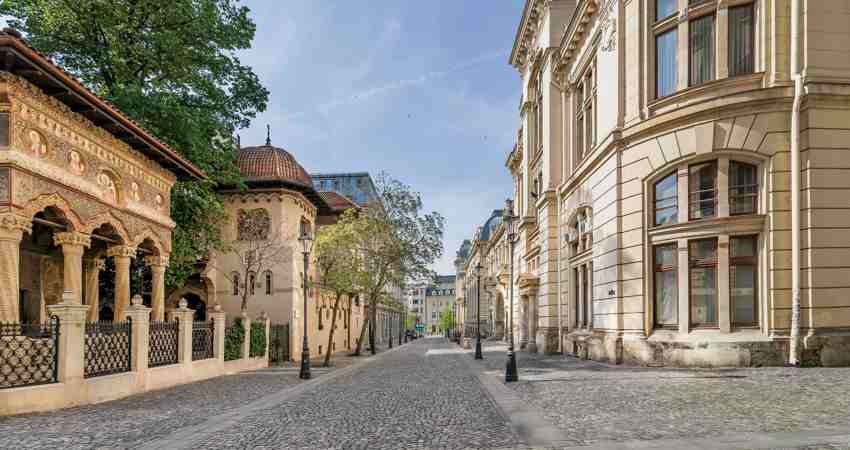
One of Bucharest’s most elegant streets, in Lipscani
The jewel of Bucharest’s architecture is the Palace of the Parliament, the second largest administrative building in the world, surpassed only by the Pentagon. Originally conceived as the House of the People, its construction began in 1985 and mobilised more than 20,000 workers, at the cost of razing entire neighbourhoods of the city. The project was led by architect Anca Petrescu, who was just 28 years old when she won the competition to design it. She conceived a vast structure spanning more than 340,000sqm, rising 12 storeys above ground and extending eight levels below. Today, visitors can explore this vast complex through guided tours, available both in advance and on site. A passport is required for entry, as the complex still serves as the seat of Romania’s Chamber of Deputies and Senate.
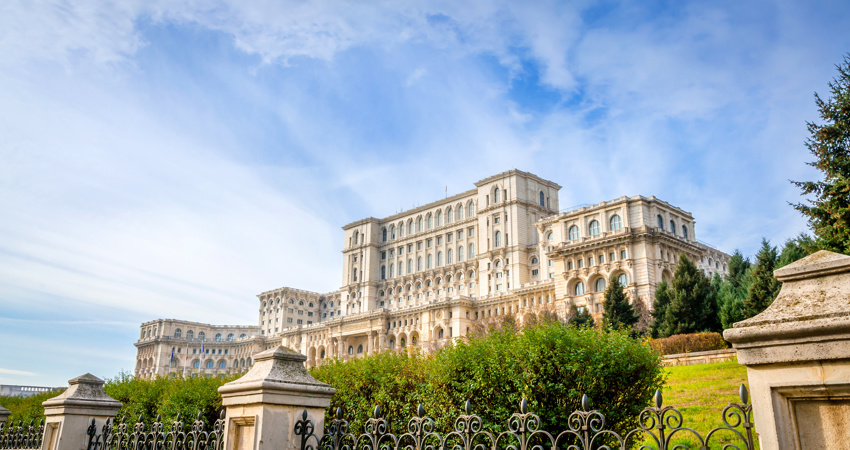
View of the monumental Palace of Parliament
Surrounding Romania’s Parliament lies the Old Town, home to the iconic Lipscani district – one of the few historic areas to survive Ceaușescu’s sweeping demolition and urban redesign plans. Once the city’s commercial heart, it was here that Bucharest developed, in the early 20th century, a vibrant café culture shaped by a blend of French and Ottoman influences. Pastries, conversation and literary gatherings defined the scene, earning the city its nickname ‘Micul Paris’ (Little Paris). Neglected and left to deteriorate during the Communist era, Lipscani has since been revitalised and is now Bucharest’s trendiest neighbourhood, as if history had found its way back to the same streets. It is precisely there where the coffee culture has been revived.
Today, Lipscani offers a compelling mix of past and present. Highlights include Origo, pioneers of speciality coffee since 2013. With their flagship space in the neighborhood, they feature specialty coffees and a cosmopolitan concept that, in their own words, has contributed to developing "an entire cultural ecosystem with a community that includes not only guests, but also roasters and baristas." Don't miss Carusel Café, set on the upper floor of the iconic Cărturești Carusel bookstore, with its dreamlike interiors and cultural events, and Mingle, slightly off the beaten path but well worth the visit for its unique blend of excellent coffee and carefully curated antiques, from vintage pieces to rare collectibles.
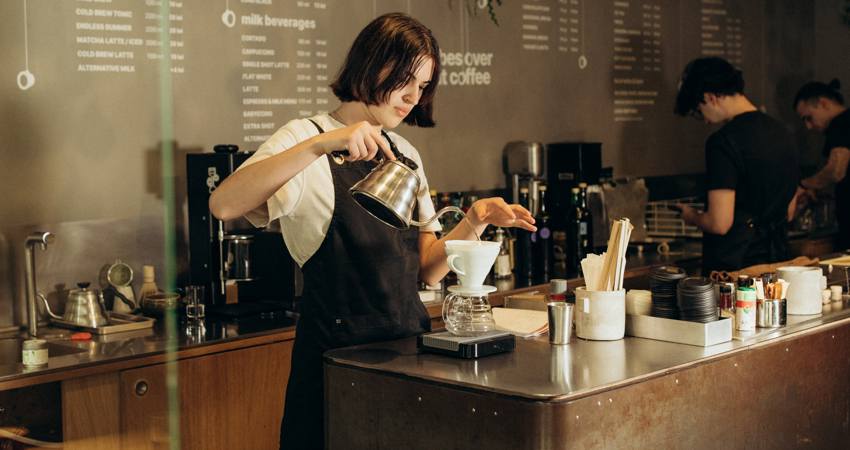
The specialty coffee scene has established Bucharest as a landmark in Eastern Europe. Photo by courtesy of Origo
When it comes to dining, Bucharest’s most traditional venues remain firm favourites. Casa Capșa – now also a hotel – was founded in 1852 as a pâtisserie and is still in operation today. It was here that the iconic Joffre cake was created. Once a gathering place for the local aristocracy, Casa Capșa preserves that legacy in a restaurant that blends Romanian cuisine with international influences. Without doubt, however, the city’s most famous landmark restaurant is Caru’ cu Bere. Established in 1879, its striking Neo-Gothic façade and richly decorated Art Nouveau interior have been impeccably preserved, earning it status as a historic monument. It is the perfect place to sample Romania’s most beloved dishes, including ciolan de porc (pork knuckle), one of the house specialities, the famous Romanian mici (grilled sausages), and papanași, the country’s most iconic dessert.
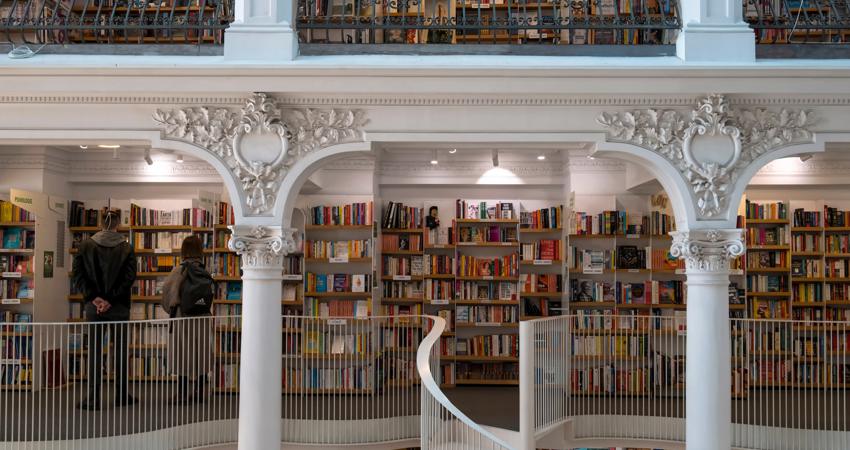
Interior of the Cărturești Carusel bookstore
Bucharest also invites visitors to explore places steeped in legend. Among them are the ruins of the fortress associated with Vlad the Impaler, perhaps Romania’s most infamous historical figure, who inhabited and expanded one of the capital’s oldest structures in the 15th century. Located between the Parliament and the Lipscani district, the surviving remains of Curtea Veche – the Old Princely Court – now house the Archaeological Museum, which showcases artefacts uncovered in excavations across the region since the 1950s.
Bucharest also serves as the gateway to Transylvania, the region nestled at the heart of the Carpathian Mountains. From the capital, a wide range of tours depart daily, offering options for every type of traveller. For those who prefer to explore independently, the train is the most convenient choice, with connections taking just over two hours between Bucharest and Brașov, the region’s main city. Alternatively, travelling by car allows you to fully enjoy the spectacular scenery of the Carpathians along the way.
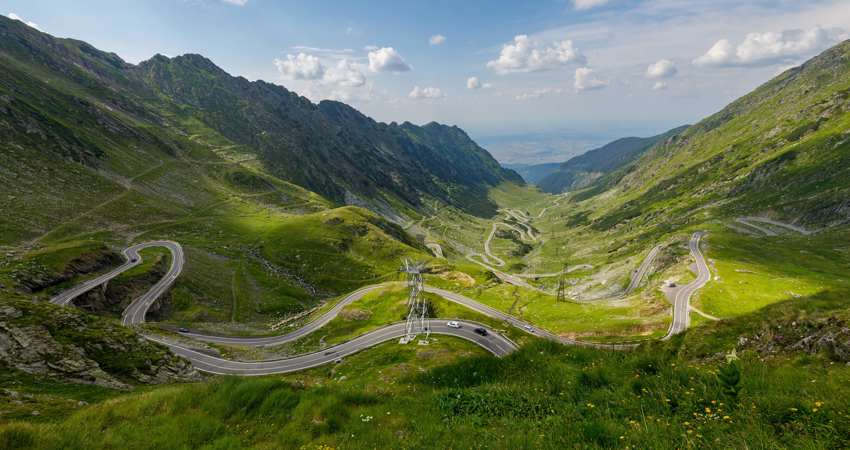
View of the Carpathians
Once there, don’t miss Peles Castle – a true fairytale destination. Built between 1873 and 1914, it quickly became one of Europe’s architectural landmarks thanks to its striking Neo-Renaissance design and pioneering features, including a retractable glass roof and its own power plant, making it the first palace in Europe to have a lift and central heating. Of course, the region’s most iconic site is Bran Castle, globally famous for its association with the Dracula legend. While Bram Stoker chose it as the residence of his fictional character, the historical figure behind the myth, Vlad the Impaler, never actually lived here. Even so, the castle remains an impressive mediaeval fortress well worth a visit. To explore more of the Carpathians, head to Brașov, a charming mediaeval town, or visit Cantacuzino Castle, recently back in the spotlight after inspiring Tim Burton’s vision of Nevermore Academy in the series Wednesday.
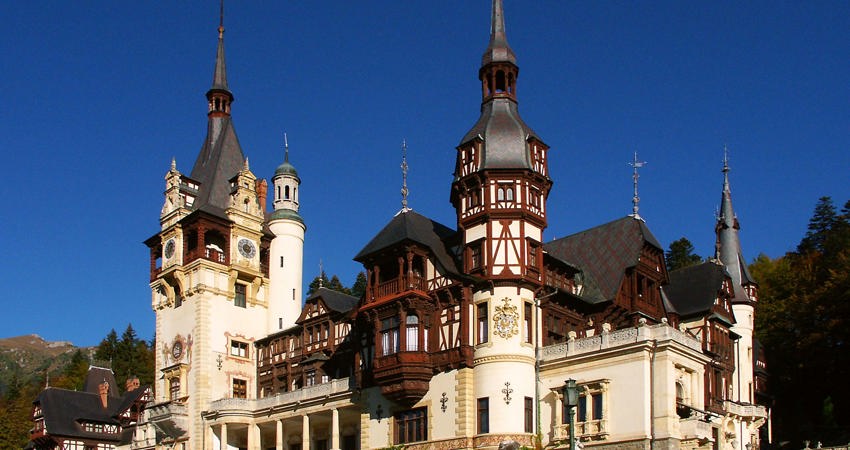
Outside view, courtesy of Peleș National Museum
Back in Bucharest, before heading home, unwind at Therme București, the largest wellness complex in Europe. This vast space offers something for everyone: Galaxy, the continent’s largest indoor water park; The Palm, a botanical garden where you can relax with a cocktail by indoor or outdoor pools; and Elysium, a dedicated wellness area offering a wide range of treatments.