From Altamira to Faro Santander: Cantabria through art
From the pigments that brought Altamira’s bison to life to the spaces that now energise Santander’s cultural scene, Cantabria has been a source of inspiration for centuries. Across the region’s 5,321 square kilometres, caves, museums, institutions and internationally renowned cultural centres coexist, including its latest addition: Faro Santander.
Artistic expression in Cantabria dates back some 36,000 years, with Altamira providing its most celebrated example. Palaeolithic inhabitants settled here over a period of some 22,000 years, leaving behind their earliest drawings in the form of geometric shapes, lines in what is now a 270m complex of chambers and galleries. Initially abstract, these designs gradually became more sophisticated, eventually giving rise, between 17,000 and 15,000 BC, to what is now regarded as the Sistine Chapel of cave art: the Great Ceiling of the Polychrome Bison. Painted using charcoal and iron oxide, the images remain in an excellent state of preservation, making it possible to confirm that the paintings were a collective work featuring 16 bison, two deer and at least two horses. They are accompanied by negative handprints on the walls of the chamber and, elsewhere in the cave, the fascinating outline of a small child’s hand.
For conservation reasons, the original cave can only be visited by specialists dedicated to its preservation. However, outstanding museum management has led to the creation of the Neocave, an exact reconstruction that offers a glimpse of what Altamira looked like 13,000 years ago. The cave, which was declared a Unesco World Heritage Site in 1985, is located in the mediaeval town of Santillana del Mar, included on the list of Spain’s Most Beautiful Villages.
Another remarkable example of Cantabria’s cave art can be found at El Castillo, an archaeological site just 20km from Santillana del Mar that was also declared a Unesco World Heritage Site in 2008 and forms part of the Monte Castillo complex. Its archaeological significance lies in the evidence discovered there pointing to the coexistence of Homo sapiens and Neanderthals, although its fame owes more to its 40,800-year-old paintings, which range from abstract forms to figurative art, depicting horses, bison, deer, aurochs and more than 50 hand silhouettes. El Castillo is open to the public throughout the year, offering visitors the opportunity to see the original paintings.
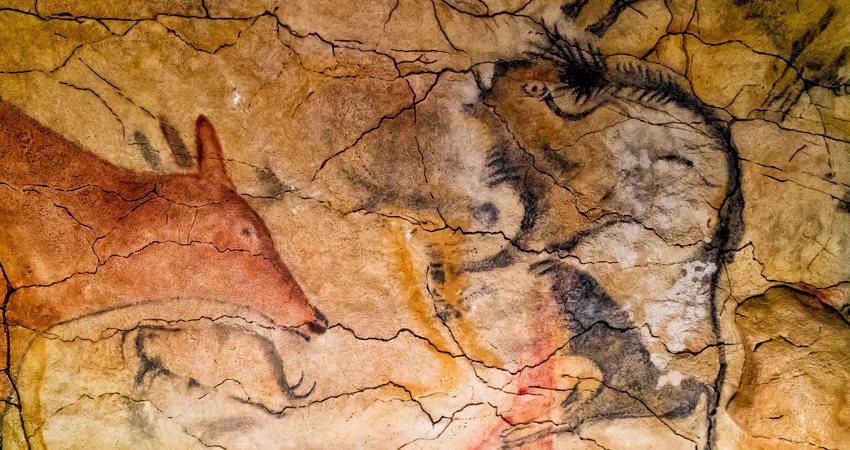
Bisons on the walls of Altamira
For cave art enthusiasts visiting Santander, the Museum of Prehistory and Archaeology of Cantabria (MUPAC) is an essential stop. Its accessible, educational approach makes it particularly appealing to families. In keeping with the city’s efforts to establish itself as an art capital, MUPAC is preparing to open its new home in 2027 in the Puertochico neighbourhood. The aim of this new architectural project is to create a public agora, with a vast exhibition space opening up to accommodate an archive, a library and social and cultural spaces.
Less than 200 metres away stands one of the leading centres for contemporary art. Open since 2012, the Centro Botín enjoys an unbeatable location overlooking the bay and occupies a building designed by Renzo Piano, winner of the Pritzker Prize in 1998, and Luis Vidal. With its twin-volume structure and ceramic façade designed to reflect the blue of the sea, the building offers more than 3,500sqm of exhibition space, alongside a programme of educational and cultural activities. Over the coming months, the permanent exhibition Punto y Contrapunto (Point and Counterpoint), showcasing Jaime Botín’s collection and bringing together works by Sorolla, Miró, Juan Gris, Rothko and Matisse, will be joined by temporary exhibitions such as the solo show Solange Pessoa: del día o de la noche (Of the Day or of the Night), the first exhibition dedicated to the Brazilian artist in Spain, opening on 10 October, and Itinerarios XXXI, which, from 21 November, will shine a spotlight on works by recipients of the Botín Foundation’s art grants.
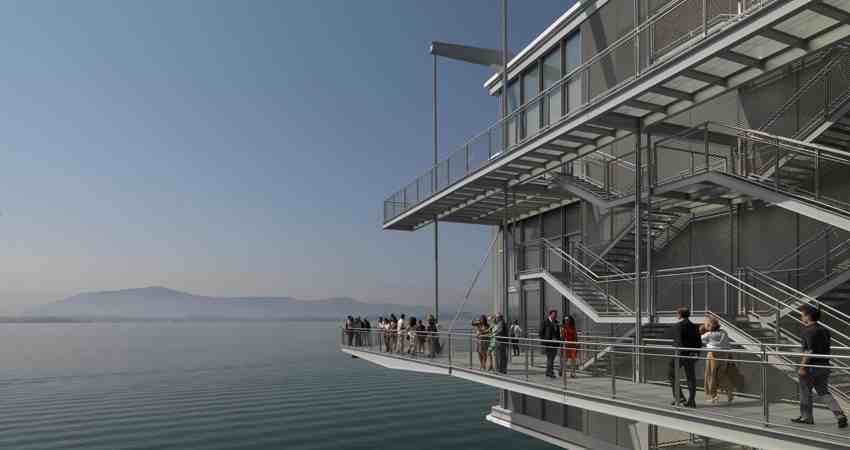
Centro Botín, photo by Enrico Cano
The season’s major new arrival, however, has been Faro Santander, a new cultural project launched by the Banco Santander Foundation with the aim of adding a new space to Cantabria’s capital where art, culture and technology come together in an environment open to all audiences. Since 8 September, this new institution has hosted a programme of major exhibitions, including Obras maestras de la Colección Banco Santander (Masterpieces from the Banco Santander Collection), featuring works dating from 1537 to 2018 by artists including Titian, El Greco, Velázquez, Goya, Picasso and Miró, as well as contemporary figures such as Manuel Millares and Soledad Sevilla; México moderno en la Colección Gelman Santander (Modern Mexico in the Gelman Santander Collection), which explores the golden age of the Mexican avant-garde and brings some of Frida Kahlo’s most famous works to Santander; and El surrealismo sintomático: Leonora Carrington (Symptomatic Surrealism: Leonora Carrington), which pays tribute to the work of one of the movement’s most important artists and explores how Carrington recovered through her art from the traumatic experiences she endured in Santander after fleeing the Nazis. Alongside these exhibitions is a calendar of events, including the Jardín Sonoro (Sound Garden) initiative and film series, as well as the culinary offering at Lumen restaurant.
Nearby, the Archivo Lafuente will soon join Santander’s cultural scene, bringing the collection of businessman José María Lafuente, acquired by the Museo Reina Sofía in 2022, to a new home. It will open in the former Banco de España building in Santander, which is being transformed into an associated centre of the Reina Sofía, providing an extraordinary resource for academic research and adding another landmark to the city’s cultural landscape as Santander continues to make history.
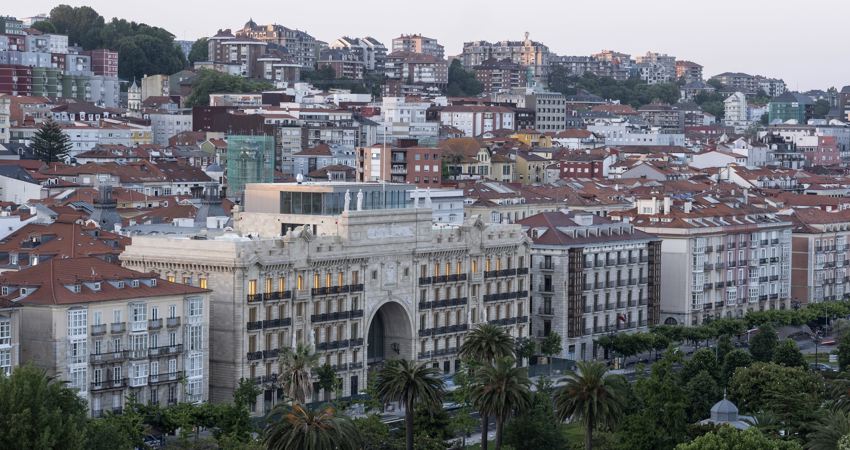
Faro Santander. Photo by Juan Baraja